

As UX designers, it's our job to collaborate with different roles across product teams. In my role at a media and consumer advice company, this includes working closely with search engine optimization (SEO) specialists, because we get a huge percentage of our traffic from people coming in through Google search. I'm not an SEO specialist myself — I'm not the one adding in meta tags or tracking ranked keywords — but being familiar with the goals and language of SEO has made me a better designer and collaborator.
What are assumptions people have about the design and SEO relationship?
There is sometimes a perception that UX design and SEO have incompatible goals. Something like: “Design cares about user needs and SEO only cares about metrics.” But that hasn't been my experience at all. I've found great value in working with SEO experts, and have learned their focus on metrics can be invaluable to achieving user needs and business goals.
This made me curious. How do SEO experts define their roles? What's their experience working with designers? How can we better collaborate?
To learn more, I went straight to the source and interviewed 7 SEO professionals. I was hoping to find more shared ground and dispel some of the myths I've heard about the SEO and design relationship. What surprised me was how often the SEO folks said things that sounded exactly like stuff I've said as a designer. They talked about establishing trust, collaborating with cross-functional teams, and being brought in early for strategic conversations. I walked away from these conversations with renewed enthusiasm for our shared goals and appreciation for how SEO expertise could improve our work.
I'd like to share what I've learned about collaborating with SEO experts, to help demystify the process for fellow designers looking to leverage SEO.
The Basics of SEO
What exactly is SEO?
When you go to Google and type in a search, Google shows you a list of results.
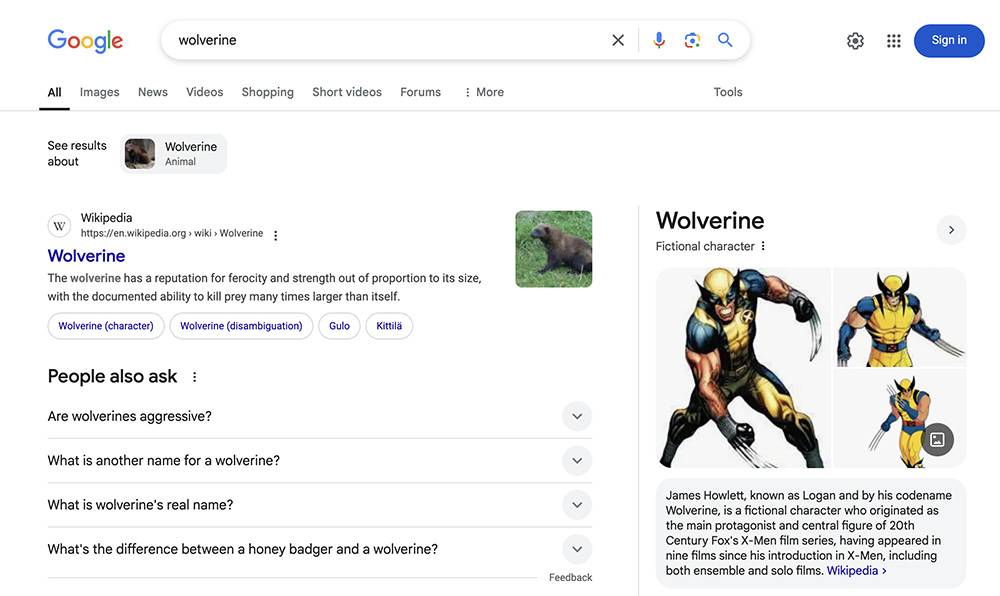
Google has complicated algorithms that choose what shows up, and SEO is the practice of optimizing your website so you show up towards the top of this list of results for relevant searches. You could even get featured in a snippet or knowledge panel. The list of results is called a SERP, which stands for “search engine results page.” As in, “After implementing the SEO changes, we are now consistently ranking on the first page of the SERPs. Yay!” And as anyone who has ever been on Google can tell you, people seldom scroll past the first or second page of results, so you really want to get to that first page.
When done right, appearing in Google rankings helps people find you and your content. There can be a lot of business value when the right people discover your site.
Do companies pay Google to show up higher in their search results?
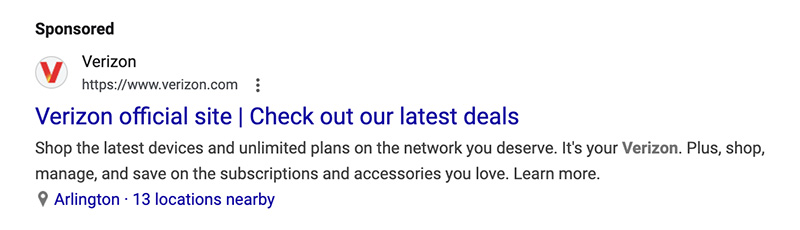
Well, yes and no. You can pay for sponsored listings, but that's different. That's a whole other area called SEM (search engine marketing). Those sponsored listings show up at the top and are clearly labeled as “Sponsored.” The stuff that shows up after the sponsored listings are organic search results, and those are not paid.
How do you test your site's SEO?
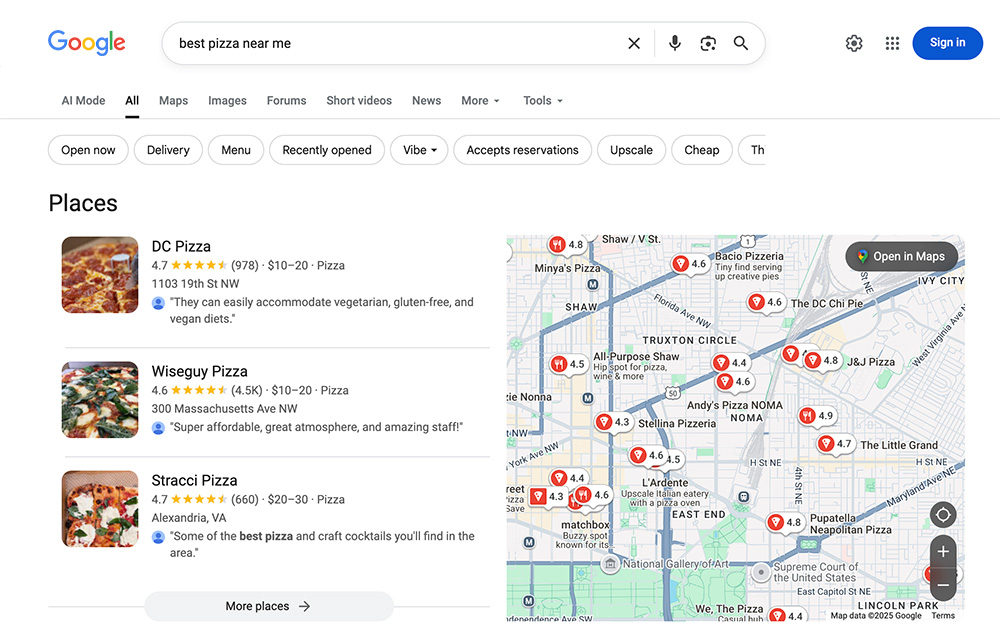
There are tools available like Semrush that allow SEO professionals to track and monitor specific keywords to see how certain pages are ranking against competitors. But for something simpler, you can just go into Google and type some keywords into search and see what comes up. (Make sure to do this in Incognito Mode so you're not getting any interference from your past browser history.)
For example, if you own a pizza shop, try searching for “best pizza near me” and see what comes up in the results. Is your website displaying on the first page? Who has the first result?
What does Google want?
That's the big question. Google releases guidance, but not specifics about their algorithm. They don't want you to game the system. Back in the early days of search engines, people would try all sorts of hacks like putting trendy keywords like “Britney Spears” on their site that had nothing to do with the site's content, just to boost search rankings. Google became the dominant search engine by helping people find exactly what they were looking for, and they did that by rewarding content that's good, relevant, and trustworthy.
Google pushes for certain types of content and behaviors. (And penalizes sites for shady behaviors.) The good news is a lot of the things they reward match up with UX goals:
- Relevant, original content
- Sites with established reputations
- Authors with expertise (This is called EEAT - experience, expertise, authoritativeness, trust. More acronyms!)
- Good site load times
- Mobile first content
Best Practices
Since Google isn't super transparent about their algorithm and also releases regular updates, some of SEO involves testing to see what works. But SEO is not a black box or magic. There are a number of best practices that when implemented well can improve the ranking of a site.
- Write good, original, and relevant content. Hopefully your company is already doing this.
- Meet search intent. You can use SEO tools to figure out what people are searching for, and then make content that answers their questions. For example, if you have an article about the best cat carriers, and people are searching “what size cat carrier can I bring on a plane?,” then make sure to answer that question in your article.
- Get people with expertise to write this good content. And make sure their name and credentials are on the page so Google can see they are, in fact, experts.
- Have a good reputation and a lot of traffic. This takes time. A brand new business isn't going to get this right away.
- Have backlinks from other websites that link to your website. This helps establish your site as having a good reputation. For example, if an author guest writes an article for another site, make sure that article has a link to the author's own site.
- Fast page load time.
- The HTML needs to be properly formatted. Google understands websites through bots crawling the site. That means the bots are getting their information by looking at your HTML. This includes things like using the correct semantic tags like <main> and <h1> so the bots can understand what the page is about.
- Meta tags should be added to the HTML to help identify keywords and topics on the page. Again, this helps the bots understand what the page is about.
As a designer, you don't necessarily need to know all the ins and outs of this, but it helps to be part of the conversation and understand the main goals.
The Value of SEO
SEO provides practical improvements that meet business goals. Its contributions are invaluable, because business goals are how decisions get made.
Gwen Milder is an SEO editor at the Washington Post. She had previously worked as a digital producer, but transitioned into SEO after seeing the way the work had a much more clear dotted line to the business. Gwen finds value in the way she can use SEO research to help content writers understand what their readers are searching for, meet these readers where they are, and therefore reach the widest possible audience. For example, for various topics in the news cycle, she can identify the types of related questions people are searching for, like “how does due process work?” And then with that information, the content team can produce an explainer article on due process, which meets their users' needs.
In my experience, SEO projects often have a lot of sway because of this clear business value, so they are good teams to collaborate with. For example, my company used to have an ad slot at the top of pages that would jump the content down as the ad loaded. It was very annoying and people regularly complained about it in user testing sessions. But because of ad revenue targets, we couldn't touch it. That is until Google started penalizing sites for poor “Cumulative Layout Shift.” Once the ad loading became an SEO issue, fixing it became a top priority. Design, tech, and SEO worked together on this project. We ended up keeping the ad but changing the way it loaded, which was a win-win for everyone.
Content strategist and UX designer Rebekah Baggs didn't always appreciate the value of SEO. But she came to see the overlap in design and SEO goals through collaborating with an SEO colleague, and they ended up starting their own consultancy together. Rebekah explains that SEO can be a user research shortcut. Clients often don't want to pay for UX services, but they will pay for user research when it's tied into SEO work because they understand the business value this provides.
And this practicality can scale up or down depending on resources. Content producer Alan Manton describes how he will prioritize and adjust scope on his SEO projects based on the project and team resources. Just like a little user research is better than none, SEO work can scale too.
Working Together
There is much overlap between SEO goals and UX goals, which opens up a lot of potential for collaboration. In my research, I was pleasantly surprised by how often the SEO professionals turned to topics that sounded like design discussions, talking about big-picture strategic thinking, cross-discipline collaboration, and building relationships and establishing trust.
SEO strategist JR Ridley describes how over the years, SEO goals are aligning more and more with those of design, easing tension and creating more opportunities to work together. He explains that it's become much less about hacking the Google algorithm and more about working with teams to build products that solve problems.
And while there are a number of technical aspects to SEO roles, just like in design roles, these technical parts are still in service of the overall goal of the product. SEO experts also care about big picture thinking and strategy. Did the user find what they were looking for? Does our content meet their search intent? Is it helping them solve their goals?
SEO consultant Dan Shure likes to picture his grandmother doing a Google search. Would he be happy with her experience and what she found? Dan got into SEO by using it to boost his small music business and find clients, so he brings a holistic mindset to the work. He sees the tendency for SEO folks to get stuck in their bubble discussing minute details, but cautions not to lose sight of the big picture. We designers certainly have this tendency too. We can get into the weeds on the latest tooling and trends, but none of that is important if we aren't making valuable products that solve people's problems.
What's the best way to collaborate with SEO teams?
Bring them in early to projects. Have them join the initial brainstorming sessions. Include them in the goals and requirements gathering. (So you know, the same advice we give about collaborating with designers.)
SEO manager Jeff Budd explains that there is always an SEO solution to the goals of the project. Often the content just needs to be coded in a certain way, and that always goes smoother if he can be involved early on and help write requirements. His colleague, SEO manager Jennifer McCallen, agrees. She explains when SEO is brought in at the end of a project to do a quick check, it puts them in the unenviable situation of vetoing finished work and potentially derailing a launch. That's not a position anyone wants to be in. Instead, it's much better and more efficient to include them in the requirements gathering portion of the project, so everyone is on the same page and the project is set up for success.
I've personally experienced my project getting derailed when we brought SEO in at the end and then learned we had missed a major requirement. It was frustrating at the time, but I learned not to do that again. I know how much more value design can bring to a project when we are included from the beginning, and I've learned it's the same with the SEO team.
Takeaways
There's a lot of value in designers collaborating with SEO folks. Just like with other roles we work with like developers, product managers, project managers, and data analysts, we all come in with different skill sets but shared overall goals. And we can be more effective when we all work together. A rising tide lifts all boats.
I'd love to hear about a great SEO/designer collaboration you've had. Reach out on email or LinkedIn.
And big thanks to everyone who chatted with me about their work in the SEO space! I learned a lot. Thanks goes to Gwen Milder, Rebekah Baggs, Alan Manton, JR Ridley, Dan Shure, Jeff Budd, and Jennifer McCallen.